
Eviset Named a 2026 Healthcare Disruptive Innovator by the Clayton Christensen Institute
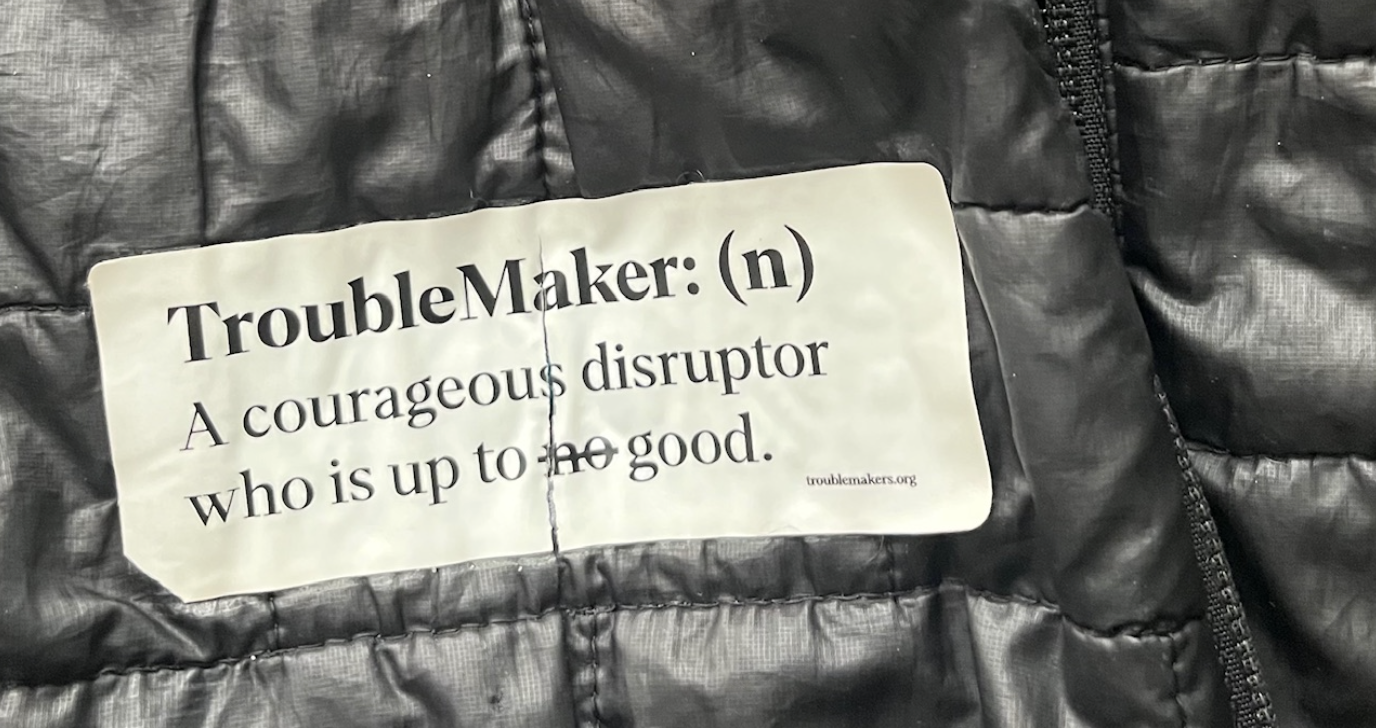
February was an exciting month for Eviset. We were deeply honored to be recognized by the Clayton Christensen Institute as a 2026 Healthcare Disruptive Innovator.
For those of you who don't know, the Clayton Christensen Institute is dedicated to fostering disruptive innovation that has a positive impact on the world and uses Disruptive Innovation and other theories developed by Harvard Business School Professor Clayton Christensen, one of the most influential thinkers in business and innovation of the modern era. The Institute’s Healthcare Disruptive Innovator program identifies and celebrates the most promising companies that are challenging the status quo and driving meaningful change in the healthcare sector.
Reflecting back: How It All Began
The occasion prompted me to reflect on why I co-founded Eviset in 2022 with Venus Wong and the vision that inspired that life-changing decision. In that era, I could be found proudly wearing a black patagonia jacket with a sticker like the one above taped to the front reading: Troublemaker (n): A courageous disruptor who is up to no good. (Shout out to Troublemakers.org who sell these fantastic stickers and fellow Wharton alumnae Bari Harlam who co-founded TroubleMakers because “Women who cause trouble change the world.”)
I guess you could say I was on the hunt for an opportunity for outsized impact.
We found one.
In post-Covid 2022, the U.S. Health system was finally beginning to embrace in earnest the positive role that social drivers of health have on health outcomes and reduction of total cost of care. But, as even the most progressive health payers had to acknowledge, trying to identify high-quality social care service providers was like “flying blind” with no standardized objective quality and experience measures to guide them.
We set out to fix that.
The idea: Quality & Experience Visibility for Care in Homes and Communities
The idea was to design and scale tech-enabled, low-burden mechanisms to systematically capture patient-reported experience and outcomes from diverse, vulnerable patient populations receiving care in their homes and communities. This way, health insurance payers, governments, and health care providers making policy, funding, and care referral decisions could access direct insights into how well services – and even individual social care providers – are actually working for the people they are intended to serve.
With this level of visibility into social care experience and quality, there would be no more “flying blind” for health care partners looking to make social drivers of health an effective high-value component of patient care (e.g. Medicaid 1115 waivers, proposed inclusion of Medically-tailored meals as a covered benefit for Medicare Advantage programs, ACOs and other value-based care organizations, etc.)
To underscore the importance of this, I like to paraphrase former Surgeon General Koop who famously observed about the medication non-adherence problem, “Drugs don’t work in people who don’t take them.” The same goes for social care intervention adherence. These services don’t work for people who don’t use them. Just like for medication adherence, we need to hear directly from patients what they do or don’t like about social care services or specific providers, and what matters to them, in order to truly help them improve their health. At the time we launched Eviset, there was little to no access to this kind of data. That was a major source of friction in addressing social drivers of health and an obstacle in aligning contracting and payment mechanisms.
Actually, this is a movie we’ve seen before, just in a different theater
Fast forward to May, 2025, I went to Philadelphia where Modern Healthcare held its first-ever themed conference – to embrace “Innovations in Patient Experience”. By the time of the conference, the U.S. had clocked nearly 30 years of systematic, national patient experience data collection for traditional medical care and the room reverberated with senior healthcare executives who all confirmed that patient experience now enjoyed a core role driving strategy inside their organizations. No one except me was talking about surveying for patient experience in home and community based services (HCBS) and social care, but at least other patient experience leaders were now intrigued.
At that conference, I realized some really good news: this is a movie we’ve seen before, just in a different theater. The same dearth of patient experience data existed in the traditional medical sector until a mechanism emerged for standardized, objective and visible surveys that catapulted patient experience and its improvement to the C-suite, budgets, and attention of the medical enterprise, spurring innovation and care improvements.
So what’s different and disruptive, then?
Most HCBS and social care providers, particularly small and community-based organizations, do not collect member-reported experience or outcomes data at all. Established solutions are designed for large health systems and are either too complex, too expensive, or too labor-intensive to deploy in HCBS settings.
The traditional view is that it is too hard to gather patient experience data for social care and HCBS. These services are usually delivered to the high-needs high-cost patients with complex health and social needs. Reaching them in their homes and communities, and coordinating data collection across a highly fragmented services sector and non-institutional settings are just some of the frequently cited challenges.
But we have been out to de-bunk these myths and meeting with success. Eviset’s customers consistently achieve response rates of 20–30%, including strong participation from populations that are typically hardest to reach, such as adults aged 85 and older, LGBTQ+ individuals, and home-bound members. And this is true across sectors as varied as food and housing assistance to behavioral health and services for justice-involved individuals.
One of our secrets comes straight from the Clay Christensen playbook – take root in a new market by offering simple applications at the bottom of the market, less expensive and more accessible. Our platform leverages advances in technology and AI that makes it easy and affordable to collect high-quality, member-reported experience and feedback data in community settings.
Delivering the positive impact envisioned by the Christensen Institute
Our focus on less expensive and broadly accessible solutions was intentional. Quality and experience measurement becomes exponentially more useful when many organizations can participate, enabling standardization and benchmarking comparison so organizations, care hubs, and contracting payers can understand where they are performing well and where improvement is needed. As we have seen in the “other movie theater” of traditional medical care, this kind of broad sector wide approach stimulates improvements in quality, accountability and patient-centered care.
We also focused on lowering the complexity of capturing patient voice for social care and HCBS by offering something practical and feasible for today. The basic feedback loop approach we deploy enables near real-time insights, allowing organizations to learn and adapt quickly rather than waiting years for formal measures or infrastructure to be implemented, demonstrating convenience not only for organizations, but also for the many vulnerable populations they are intended to serve.
Disruptive innovation is a journey to be sure. We are immensely grateful to Clay Christensen’s work and his legacy Clayton Christensen Institute for their support on the journey.
Most of all, we are excited about the future where social care and HCBS services can drive massive improvements in health and healthcare value because we, as a system, can deliver high quality care that is optimized for the patient before us.
Join us on the journey!
Julie Lawrence is CEO and co-founder of Eviset.
